Combs & Brushes
67 items covering slicker brushes, rake and dematting combs, flea combs, stripping knives, double-sided combs and finishing combs.
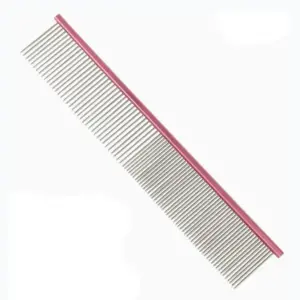
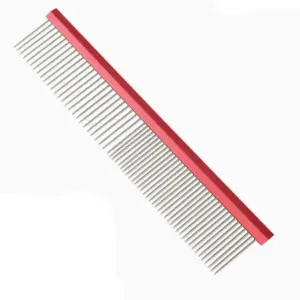
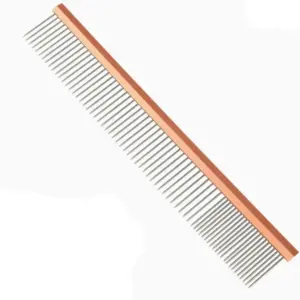
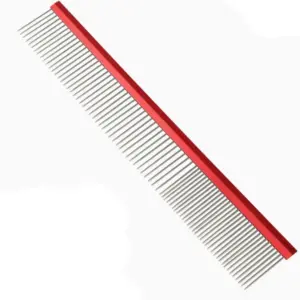
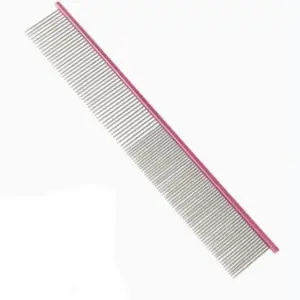
Tooth counts and spacing. Our comb range is built around specific tooth counts — including 63, 68, 77, 89 and 108 teeth — with handles in square, diamond and standard profiles. Tooth count and spacing determine what a comb does: wide-spaced teeth for dematting and thick coats, fine teeth for finishing and flea work. Because we list the count per product, you can specify precisely rather than ordering “a comb”.
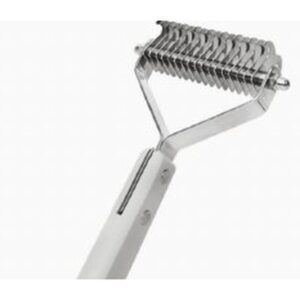
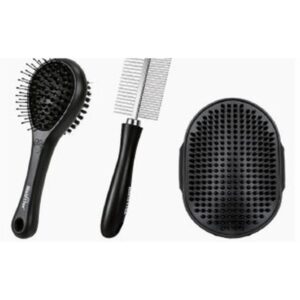
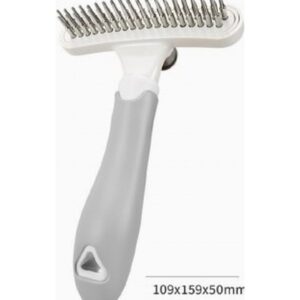
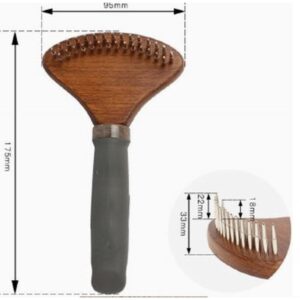
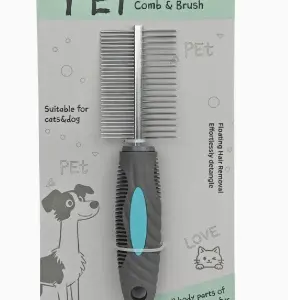
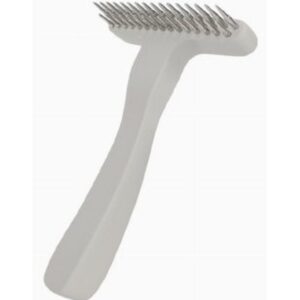
Types available. Wide-spaced grooming combs, mixed-pin combs, deshedding combs, double-sided and double-row combs, curved and button rake combs, T-shaped rake combs, stripping knives, dematting combs and slicker brushes in square and round formats.
Materials. Metal combs and rakes use stainless steel; soft-handled tools and grooming accessories use EVA, silicone and natural wool where appropriate.
Sizes. Combs and slicker brushes are listed in large, medium and small, with dimensions in centimetres and millimetres on the product pages.
Colours. Handle colours include gold, pink, rose red, red, orange, green and black, so a range can be colour-coordinated for a retail shelf.
Combs and brushes are the natural volume line in a grooming range: lower unit cost, high repeat purchase, and easy to pair with shears in a kit. Send us the tooth counts, sizes and colours you want and we will confirm MOQ and pricing.
How to specify combs and brushes
Tooth count and spacing do the actual work. Wide-spaced teeth pass through thick or matted coats without pulling; fine teeth catch fleas and finish a coat smoothly. Our listed counts run from coarse rake combs through 63, 68, 77 and 89 teeth up to 108 teeth for finishing work. Specifying by count is far more reliable than ordering “a comb” and hoping it suits the coat type.
Pin versus tooth construction. Mixed-pin combs use two pin lengths so the shorter pins support the coat while the longer ones separate it — effective on dense undercoats. Single-pin combs are simpler and cheaper, and suit finer coats. Rake combs with widely spaced teeth are for dematting. Stripping knives are a different tool again: they pull dead coat from wiry breeds rather than combing it, and they need to be specified deliberately.
Brush type. Slicker brushes use fine wire pins on a cushion to lift and separate coat; they are the workhorse tool in most grooming salons. Square and round formats behave differently in the hand — round is easier to rotate around legs and faces, square covers more coat per stroke.
Handle profile. Square, diamond and standard handles are available. This sounds cosmetic and is partly so, but handle shape affects grip during long sessions and is a genuine consideration for a professional range.
What buyers get wrong
Ordering one tooth count across a whole range is the most common error. A range that offers only 108-tooth finishing combs cannot serve a groomer working on a double-coated breed, and they will buy elsewhere.
The second is treating combs as a throw-in category. In practice combs and brushes have the highest repeat-purchase rate of anything in a grooming range: they wear out, they get lost, and they are bought again without deliberation. That makes them the most reliable reorder line you can stock.
Colours and range coordination
Handle colours include gold, pink, rose red, red, orange, green and black. A colour-coordinated range reads as a deliberate product line on a shelf rather than a collection of unrelated tools, and it costs nothing to specify at the ordering stage.
Ordering
Send us the tooth counts, sizes, handle profiles and colours you want and we will confirm specification, minimum order quantities, samples and a quotation. Combs and brushes combine well with shears in a mixed order.
Showing 1–12 of 67 results